Optimising Estates.
The drive to achieve Net Zero Carbon across estates is accelerating the need for effective decarbonisation strategies.
Embedding decarbonisation into a holistic approach to estate development will accelerate the reduction in whole-life carbon, while supporting operational growth, innovation, and enhancing each estate’s sense of place.
Our team of multidisciplinary designers have developed a holistic strategy which explores interconnected layers of the built environment; a framework that is agile, phased, and deliverable; an approach that delivers a route to Net Zero Carbon, supports business needs, and creates distinctive and enjoyable environments for all.
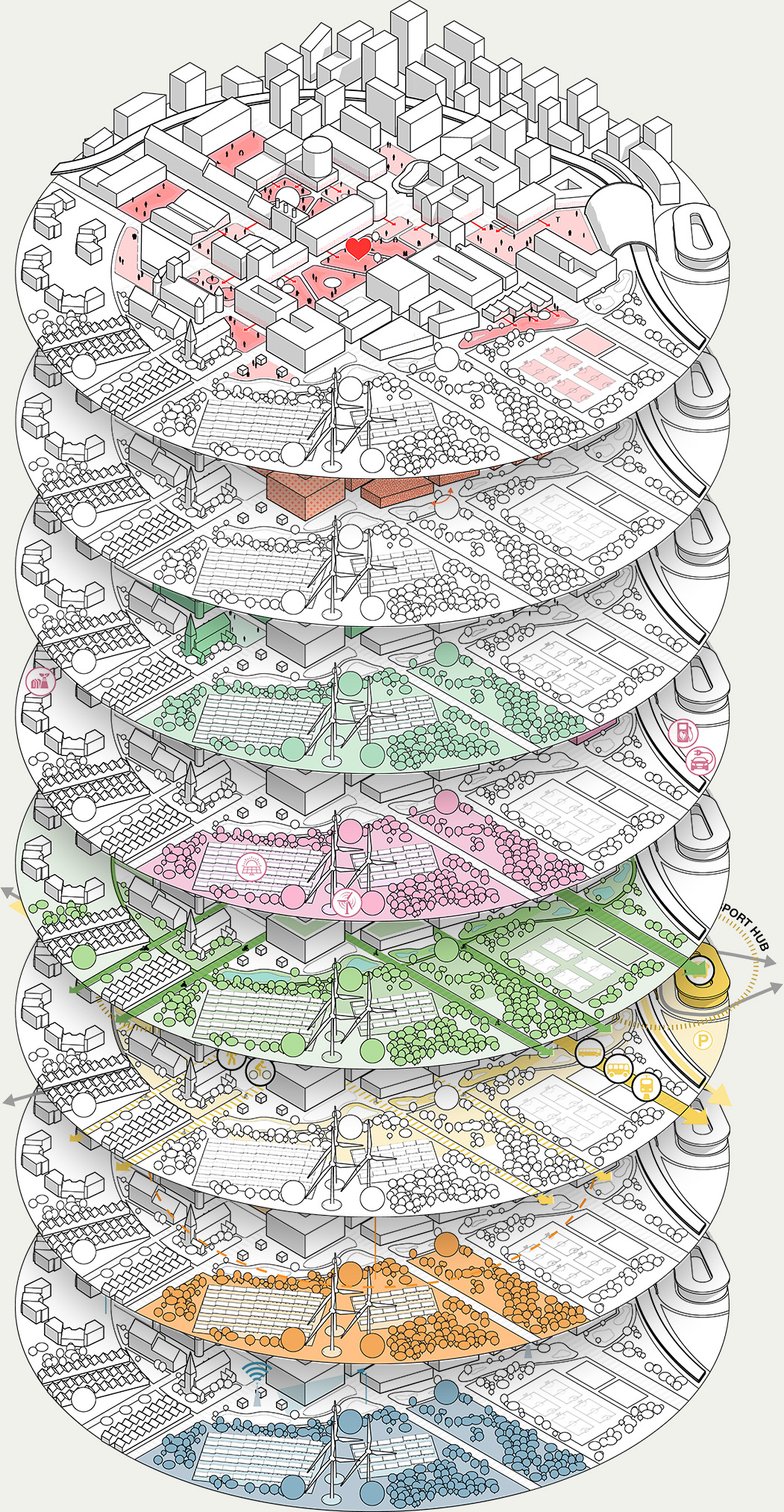
Select a layer to learn more.
[Layer title]
[Layer description]
[Your campus now description]
[Your future campus vision description]
[How to achieve your vision description]
[Layer Title]
Ideas & Case Studies
People and placemaking
Resizing and reshaping
Retaining and repurposing

Net zero ready buildings
Urban greening
A well connected estate
Zero-carbon infrastructure
Smart infrastructure
Section title
Layer statement
What you have
What you need
How you get there
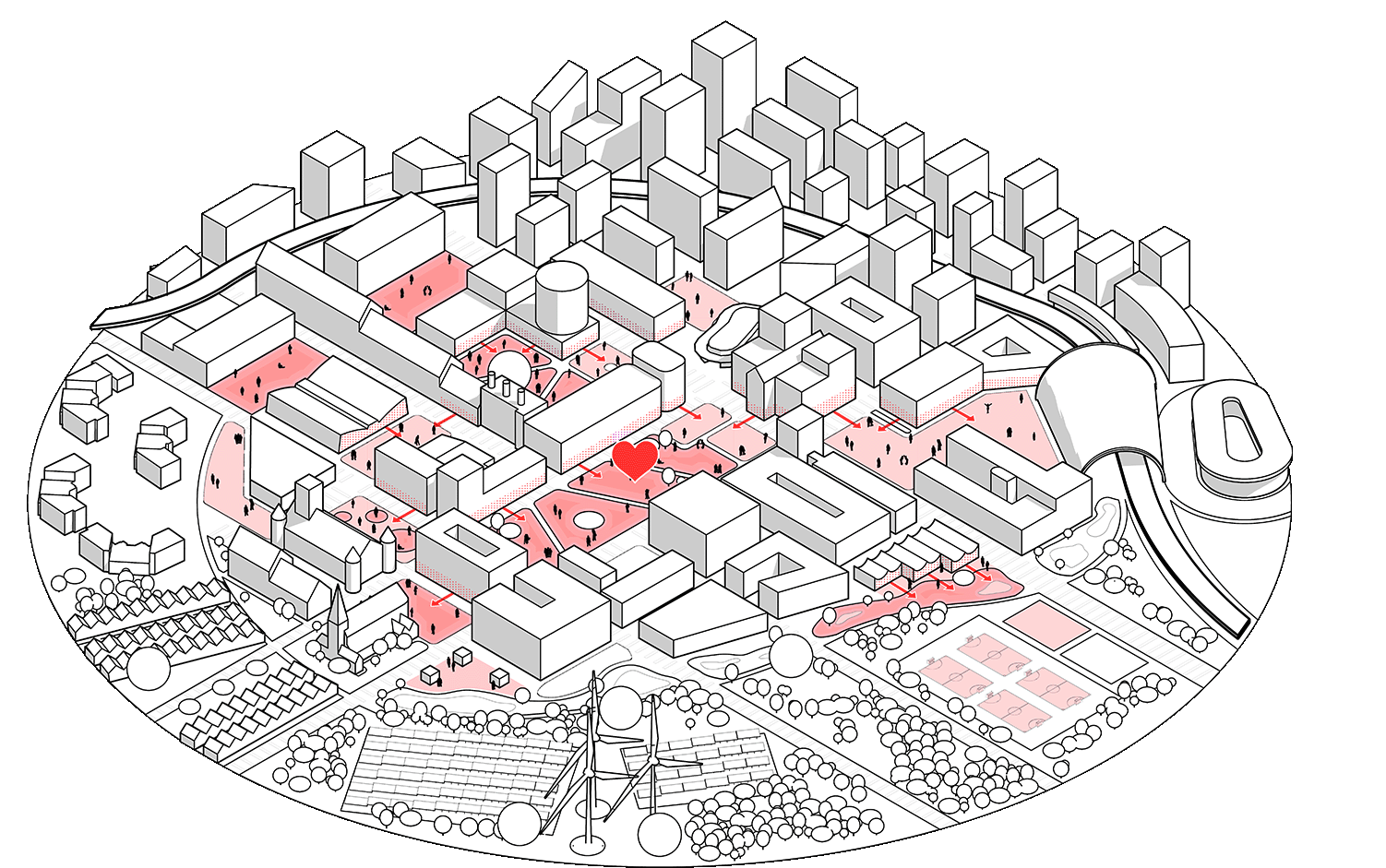
People and Placemaking
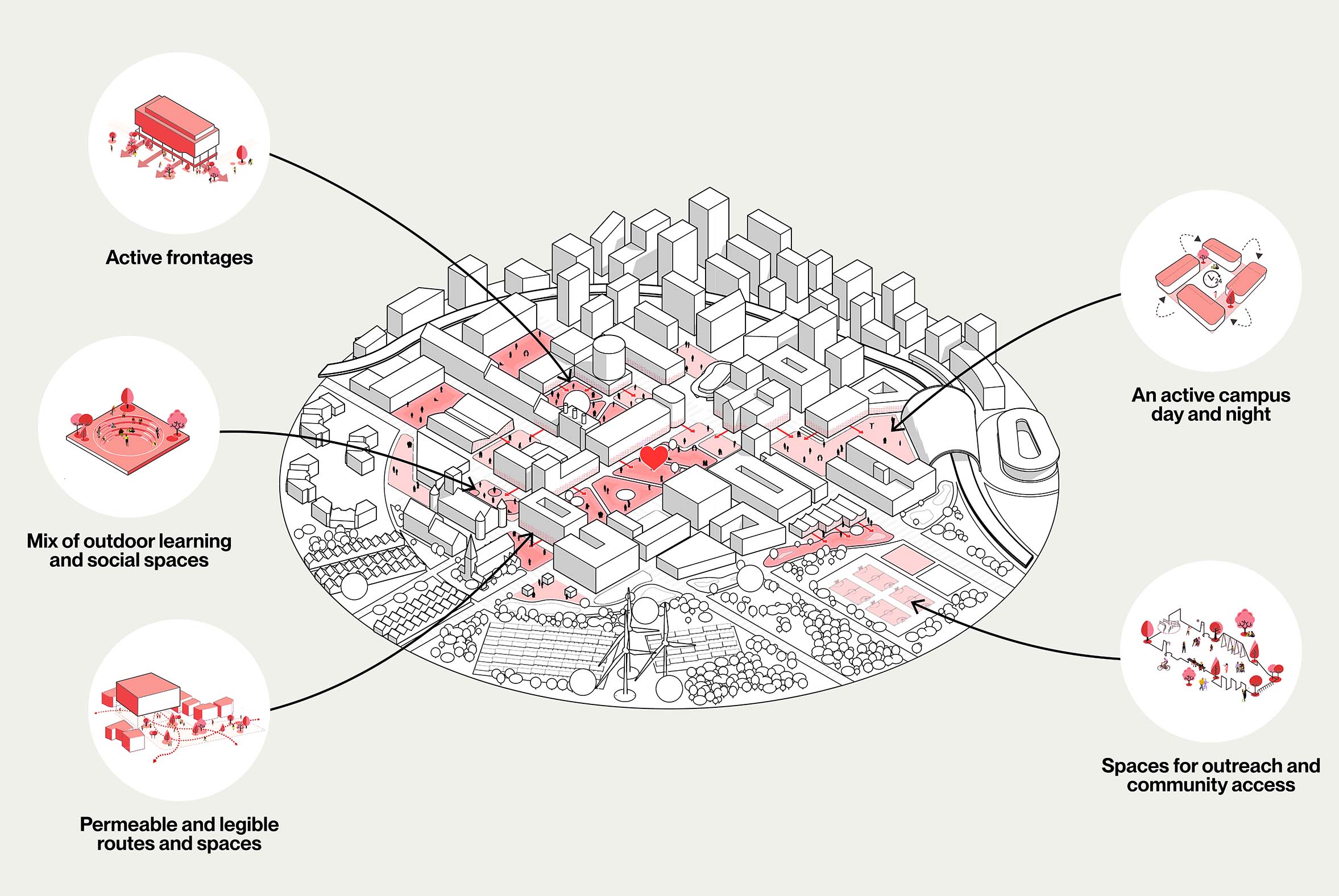
A vibrant estate encourages a strong sense of belonging for occupants, staff, visitors, and the wider community. Leverage existing characteristics and prioritise the development of high-quality indoor and outdoor shared spaces to cultivate a distinctive identity, enhancing the overall sense of community and connection.
The estate may have developed organically over time, resulting in an incoherent collection of buildings with no overarching identity, and public spaces of varying quality with limited connection between indoor and outdoor areas.
Coherent external spaces, permeable buildings with shared social activities on the lower levels, offering opportunities for a range of formal and informal gatherings and a vibrant mix of uses, to create an active and engaging environment throughout the day.
- Follow a series of phased interventions that contribute to your overarching vision.
- Identify easy wins or opportunities to transform un-loved spaces.
- Make use of poor-quality external spaces in strategic locations – low-cost interventions can make a significant impact!
- Develop shared, hub buildings and encourage co-location of teams, services, or functions.
- Organise work, collaboration, and activity spaces around shared social amenities.
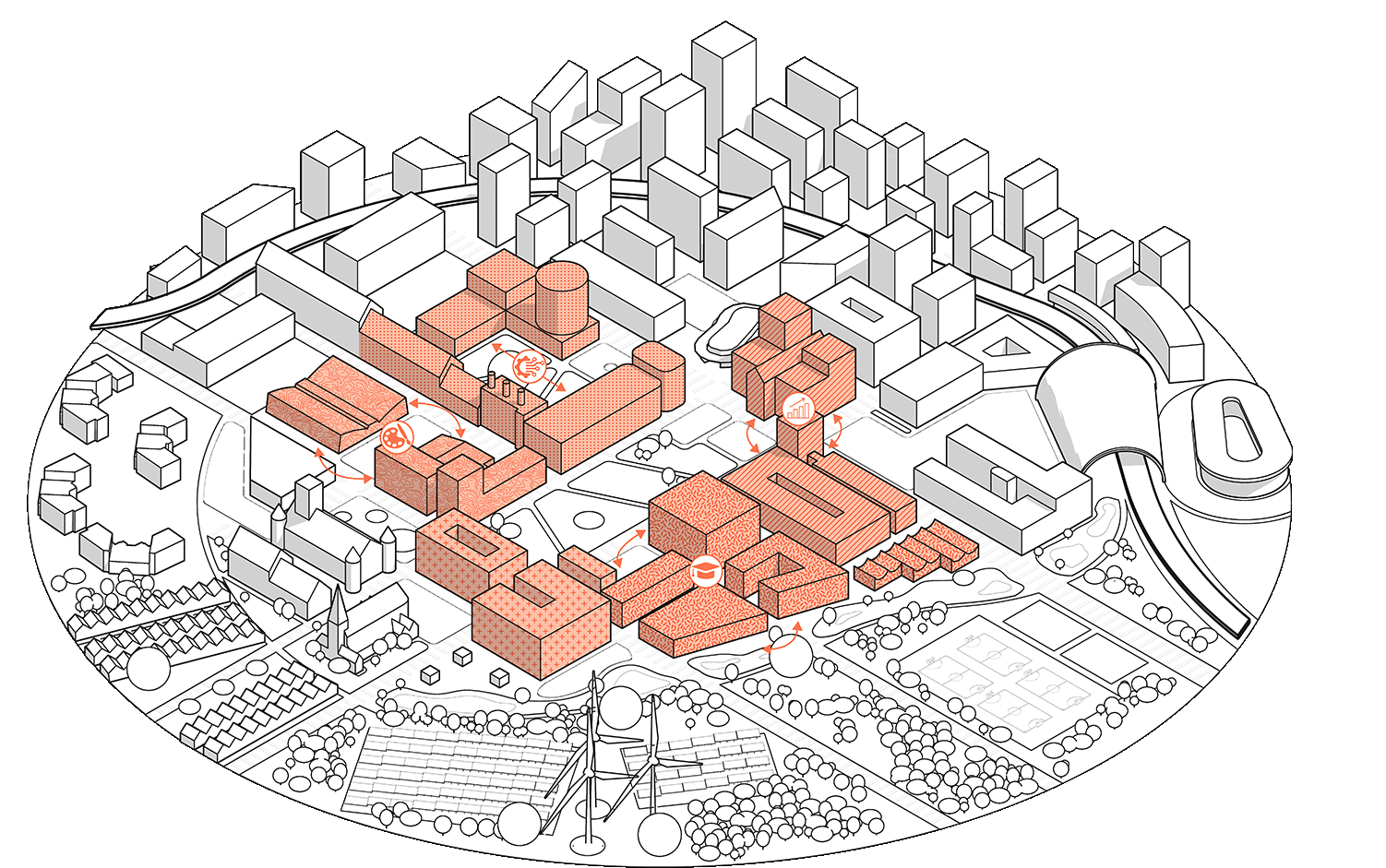
Resizing and Reshaping
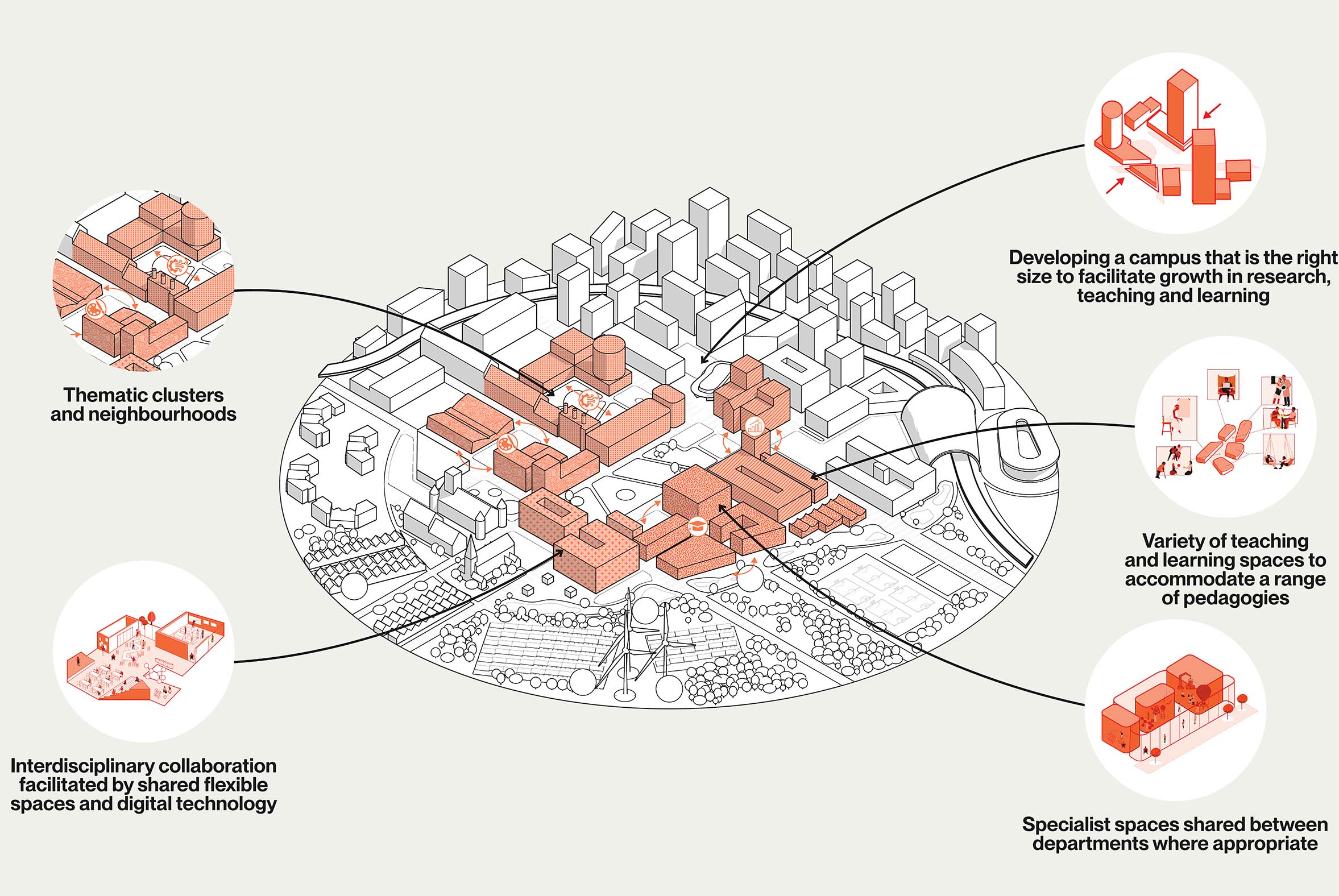
Providing the right quantity, quality, and variety of spaces will create an effective estate that enhances performance, adaptability, and user experience across all activities. Optimise utilisation of existing spaces and enhance these with new interventions.
Your estate will have evolved organically over time, and spaces may not be the right type or size to support future operational needs or new ways of working. Your current estate may have:
- Inflexible buildings of varying ages, offering mainly single-purpose or outdated accommodation.
- An imbalance in the provision of different space types due to changing organisational requirements or patterns of use.
- Spaces designed for traditional functions, with limited informal, social, or collaborative areas.
- A high proportion of ‘owned’ or siloed space that limits flexibility, multi-use, and sharing.
Your future estate should have:
- A variety of flexible work, collaboration, and functional spaces, complemented by dedicated specialist facilities.
- Spaces organised into thematic or functional clusters to encourage sharing and promote inter-disciplinary or cross-departmental collaboration.
- Spaces that enable more collaborative and applied ways of working.
- Spaces that bring people together.
- Highly utilised and multi-use space.
- A robust yet adaptable infrastructure that accommodates new technology and evolving operational needs.
- A seamless virtual and physical environment with a consistent user experience.
- Conduct a thorough analysis of the existing estate to identify shortcomings, and opportunities for improved effectiveness.
- Engage in activity-based briefing to identify specific user activities and their spatial requirements. Some activities will require generic space types, while others will be more specialised.
- Identify opportunities to share spaces and create multi-use and flexible areas
- Organise teams, services, or functions into thematic neighbourhoods, centred around shared social spaces that promote collaboration and cross-functional activities whilst maintaining individual identities.
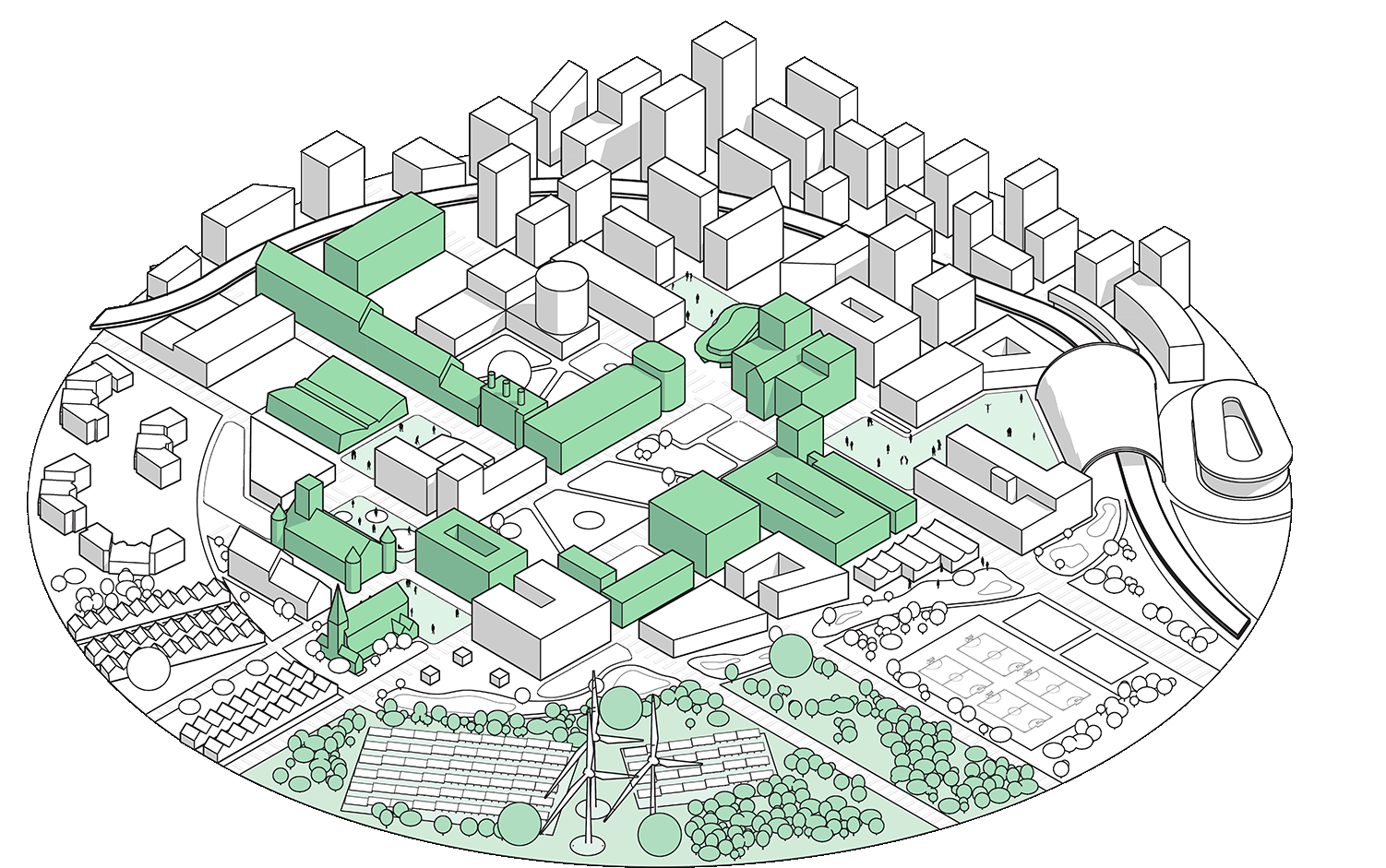
Retaining and Repurposing
Identify and define barriers and opportunities within the existing estate assets to create a resilient, thriving environment aimed at becoming net zero.
The current estate lacks a clear and applicable path towards achieving net zero emissions, presenting several challenges including:
- High energy-intensive buildings.
- High running costs.
- Heavy reliance on fossil fuels.
- Need for inclusive user engagement for the spaces.
- Not functional for modern use.
- Not future-proofed infrastructure.
A comprehensive whole-life net zero roadmap will establish both long and short-term goals for sustainability. This should prioritise preserving the sense and value of the place, encompassing its cultural, historical, and heritage significance, to benefit both users and the wider community. To achieve this, a thorough understanding, and analysis of the existing building and spaces are necessary, along with setting performance targets for operational and embodied carbon.
- Upgrade fabric and performance.
- Create a baseline model.
- Implement energy-efficient solutions and explore renewable energy options.
- Enhance thermal comfort and occupier engagement.
- Optimise spatial layouts and functionality, integrating smart building technologies.
- Continually monitor and evaluate performance.
- Explore offsetting opportunities to achieve net zero goals.
- Engage with building occupants and stakeholders.
- Conduct a thorough assessment and audit of existing buildings to understand their current state.
- Establish a “scalable” approach, offering both light-touch and deep retrofit options depending on the specific needs and circumstances of each asset.
- Develop a long and short-term strategy to achieve whole life net zero carbon goals, incorporating adequate sustainability assessment and certification methods to ensure effectiveness.
- Upgrade and improve the existing building fabric.
- Establish a monitoring and evaluation framework to track the performance of retrofitted buildings in terms of energy usage, carbon emissions, and thermal comfort.
Net Zero Ready Buildings
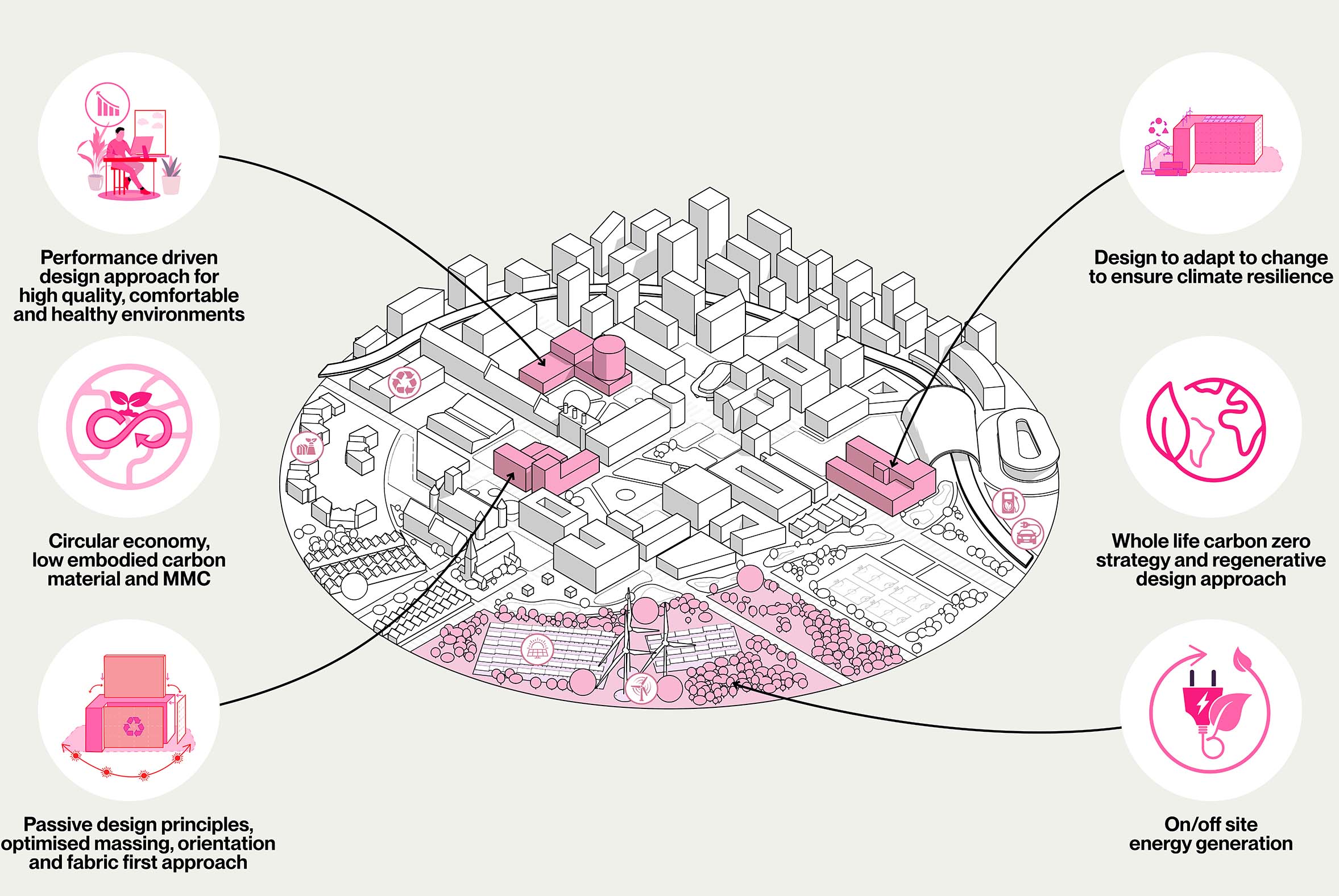
Regenerative, climate positive, high quality and inspiring buildings with whole life thinking approach, considering carbon, impact and cost.
Expanding current facilities at the national and/or international levels requires a strategic plan that aligns with broader goals, which are imperative to achieve a climate-positive estate or portfolio. However, there’s currently a lack of clarity regarding how to realise this vision. The aspiration is to create a highly inspiring and sustainable estate that attracts the best people and partners.
- A comprehensive whole-life Net-Zero roadmap for creating the most sustainable portfolio of buildings.
- Envisioning a high-performance building with low running costs through on-site and off-site energy production.
- The design emphasises a resource-efficient approach, embedding the principles of a circular economy and minimizing embodied carbon.
- Cultivating great user experiences through high-quality and comfortable spaces, fostering an inspiring environment.
- Creating the most sustainable estate or organisation is one that not only meets stringent environmental standards but also serves as a beacon, attracting like-minded individuals committed to sustainability and innovation
- Engage with building occupants and stakeholders from the outset.
- Develop a whole-life net-zero carbon strategy with a focus on prioritising and implementing passive, climatic, and performance-driven design opportunities, including considerations such as orientation, glazing ratio, and fabric-first principles.
- Optimise spatial layouts and functionality to enhance efficiency while minimising energy consumption and carbon emissions.
- Design future-proof and climate-change-ready systems that ensure resilience.
- Integrate on-site and off-site energy generation to contribute to sustainability goals.
- Set clear targets and sustainability assessment methods with ongoing monitoring and evaluation to track progress and gather feedback for continuous improvement.
- Anticipate future challenges and opportunities, plan for change and allow for adaptable design solutions.
- Develop a long-life, loose-fit solution, specifying low embodied carbon solutions, and investigating the application of Modern Methods of Construction (MMC) and off-site construction techniques.
- Apply research and innovation to support regenerative design principles, aiming for spaces that are future-proof.
- Monitor and evaluate the quality of spaces.
- Explore offsetting opportunities.
- Execute an integrated and performance-driven design approach that aims to create high-quality, comfortable, and healthy environments that promote wellbeing and happiness.
Urban Greening
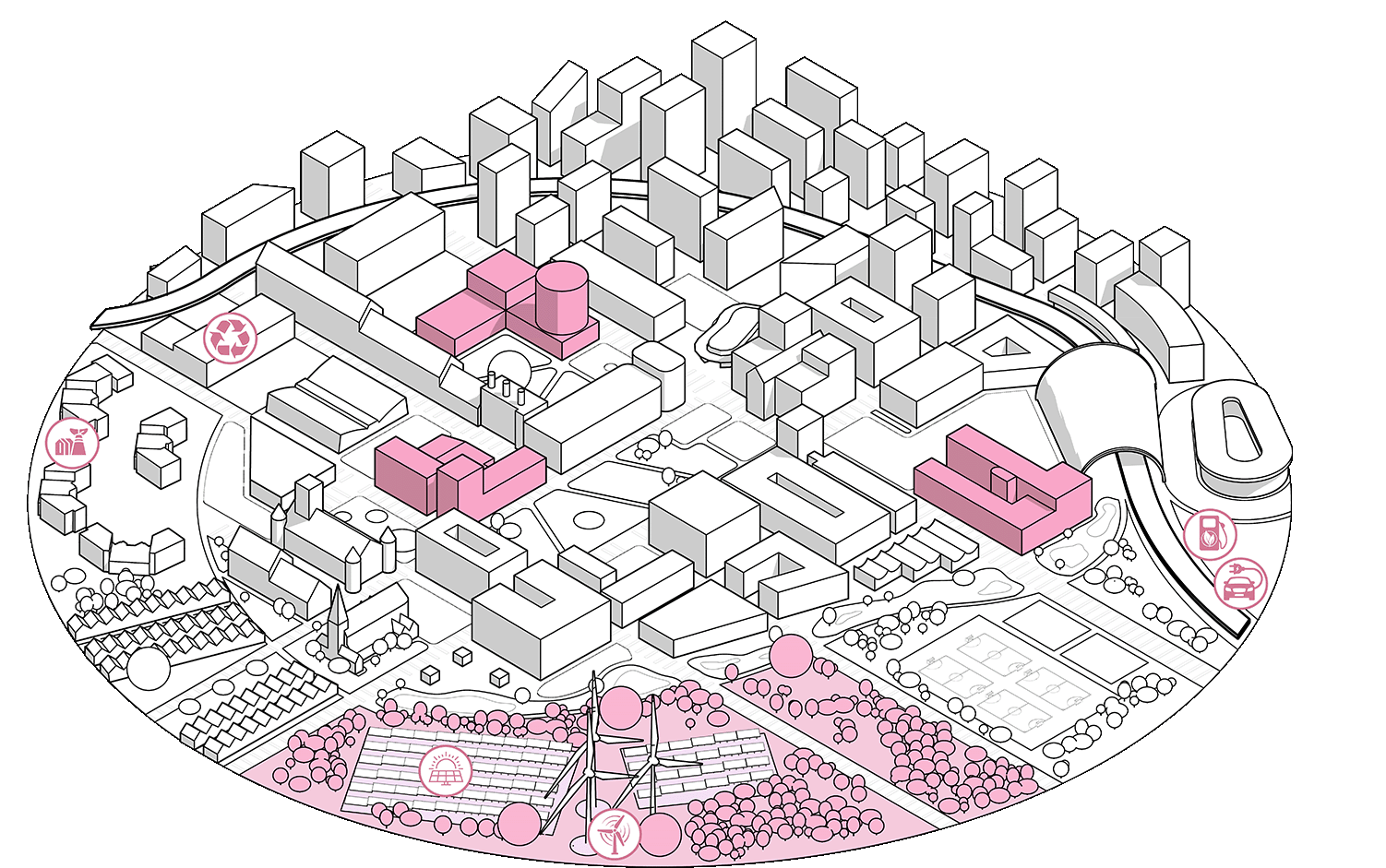
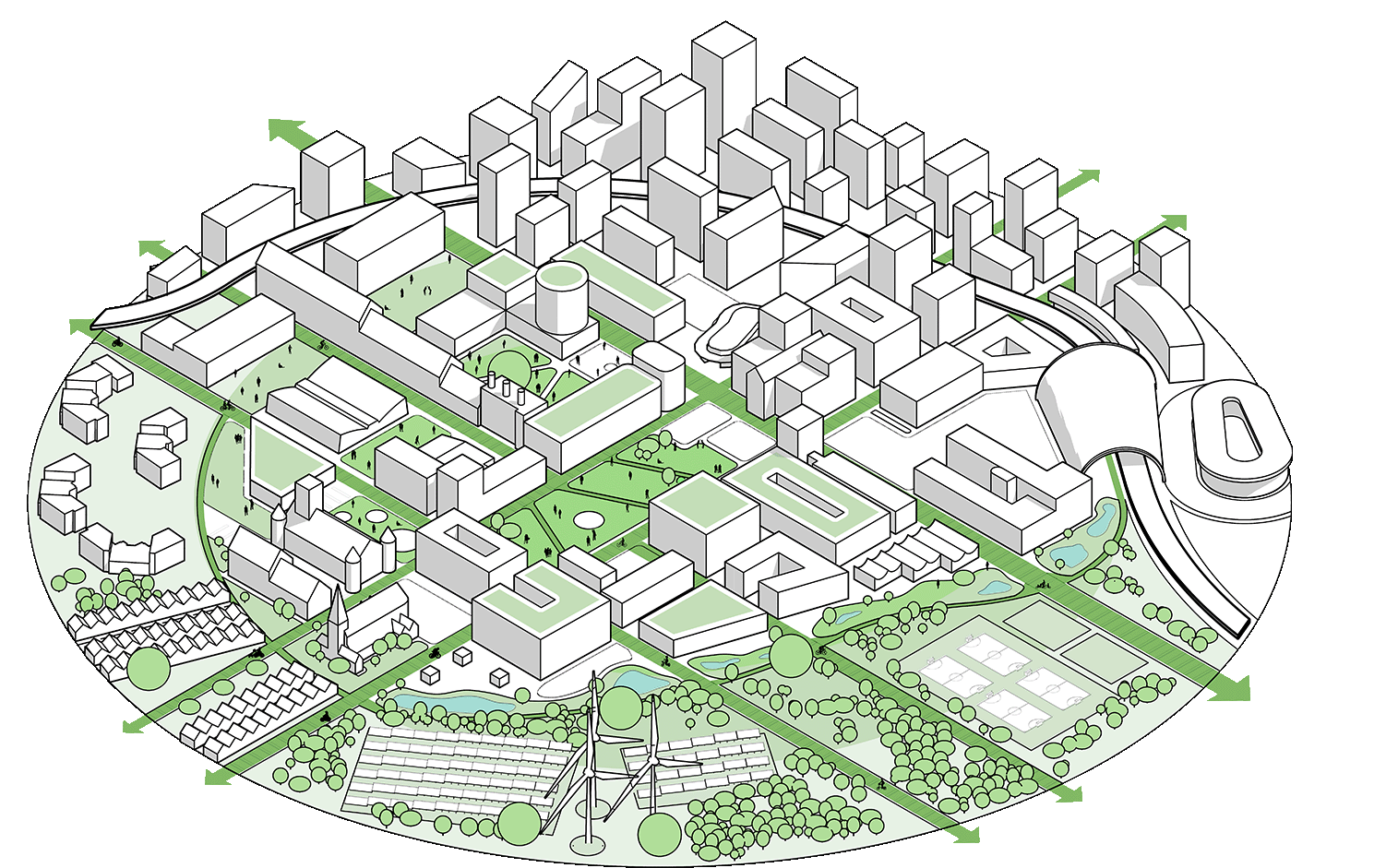
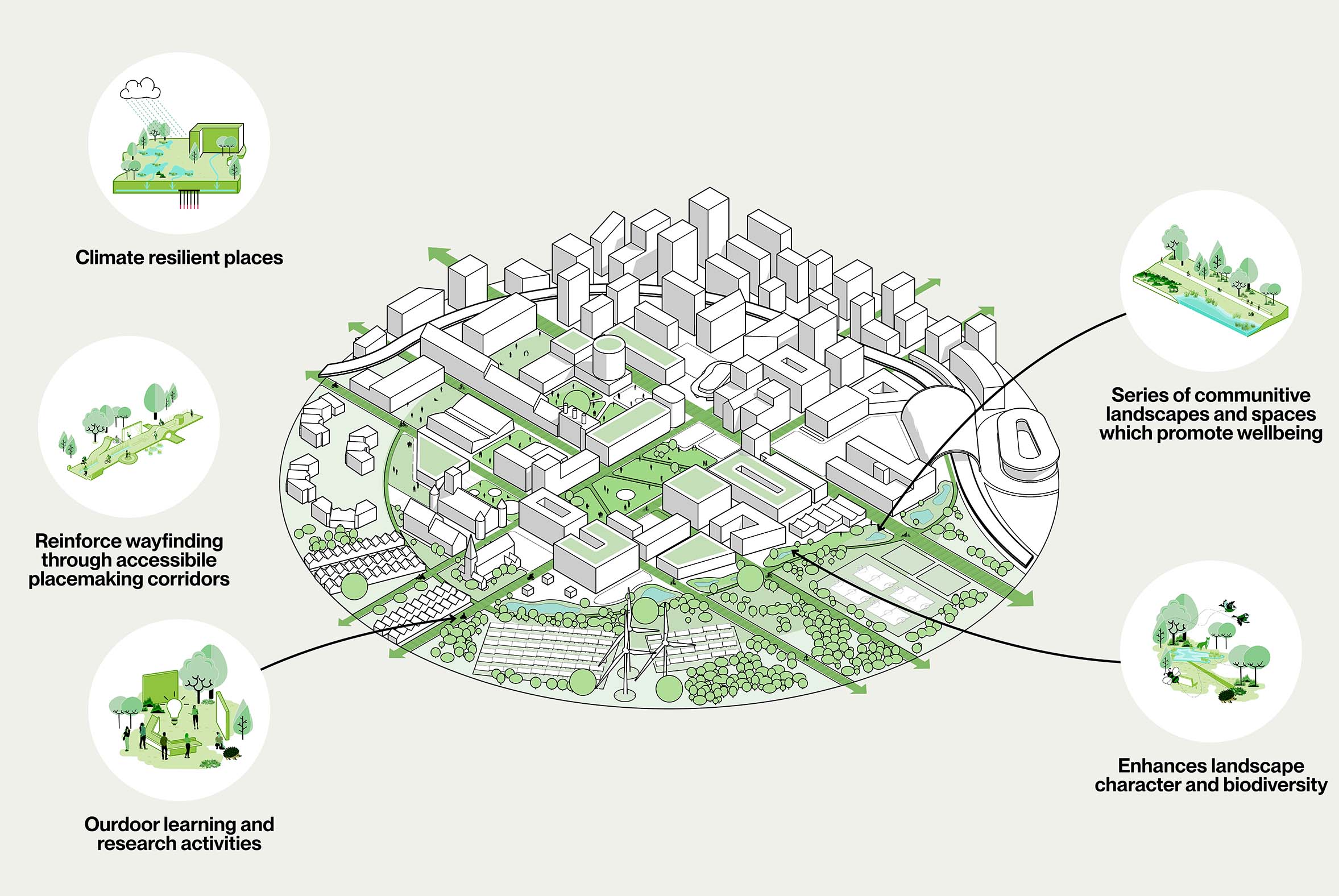
Creating a regenerative estate involves integrating nature to craft appealing, inclusive, and dynamic outdoor spaces that not only meet sustainability goals and enrich biodiversity, but also respond to the unique landscape character of a place or organisation. Such an estate is purposefully designed for climate adaptation, ensuring resilience in the face of environmental changes, while also serving to unite the built environment through a series of ‘communicative’ landscapes and external spaces.
The current state of the estate’s outdoor environment presents several challenges, including:
- Poor quality and high-maintenance green spaces and landscape infrastructure that impose a financial burden on the organisation rather than serving as assets.
- The outdoor spaces suffer from physical disconnection and inconsistency, lacking a cohesive layout. There are concerns about safety and supervision along certain routes and spaces.
- Estates or sites are overly dominated by cars and servicing needs, neglecting the needs of people and the environment.
- The landscape infrastructure fails to manage rainwater effectively or provide essential shelter and shade.
- External spaces contribute to confusion rather than facilitating wayfinding and promoting sustainable movement across the site or estate.
Creating an optimal outdoor environment entails several key elements:
- A key objective is to enhance the distinctive landscape character which is unique to the place or organisation.
- There is an opportunity to reinforce wayfinding through biodiverse ‘placemaking corridors’; to create a series of interconnected places within green space.
- There is a need for attractive, diverse, and vibrant outdoor spaces that are both easy to maintain and enjoyable to use.
- Incorporating appropriate greenspaces not only enhances biodiversity but also promotes the health and wellbeing of the community and users.
- The landscape should be designed with climate resilience in mind, integrating effective water management and planting strategies.
- The provision of high-quality outdoor spaces for work, collaboration, recreation, or community activities is essential.
- An accessible, inclusive, and well-connected network of routes will encourage use by all staff, users, and visitors alike.
- Promoting active travel through a people-focused public realm will contribute to a sustainable and vibrant environment.
- Understand and leverage the existing features of the estate, reinforcing elements of high quality.
- Embedding interpretation within the public realm design through extensive engagement with the organisation.
- Develop a phased and incremental program of works, identifying opportunities for improvement.
- Working with our sustainability and commercial team members, our landscape architects will create a ‘sustainability and placemaking toolkit’. This toolkit will identify, through engagement and high-level cost analysis, our achievable sustainability goals for the public realm, specific to the estate.
- Introduce a diverse mix of typologies, such as woodland areas, green roofs, and sustainable drainage infrastructure, you can address the complex challenges faced by estates.
- Create commonality between greenspaces through a coherent and sustainable palette; a cohesive typology of planting and sustainable paving materials which support wayfinding and enhance biodiversity.
- Integrate green and grey infrastructure into a holistic rainwater management system, thus improving sustainability.
- Collaborate with Estates and Contractor teams to minimise user inconvenience and business disruption during construction works, ensuring a smooth and efficient process.
A Well-Connected Estate
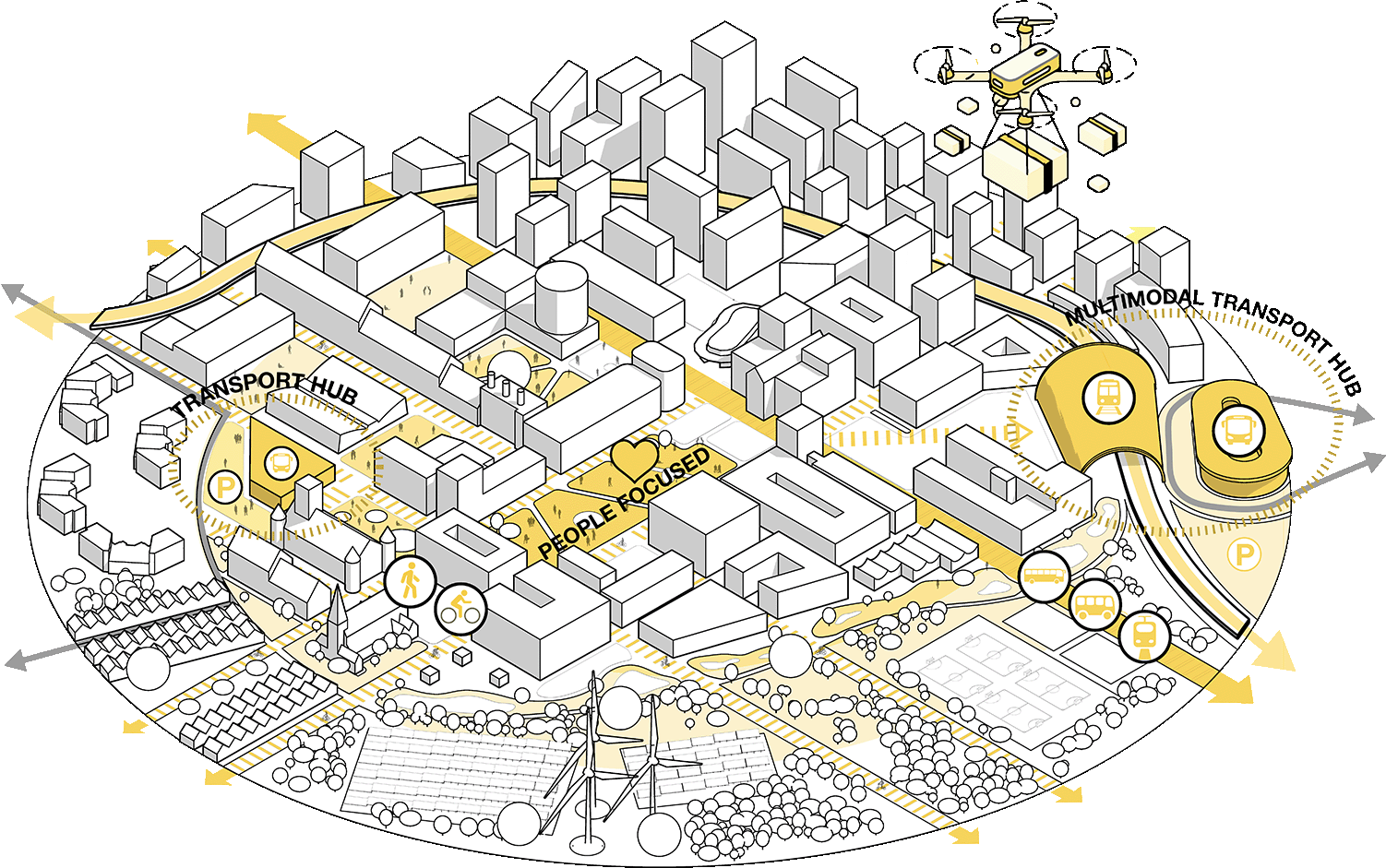
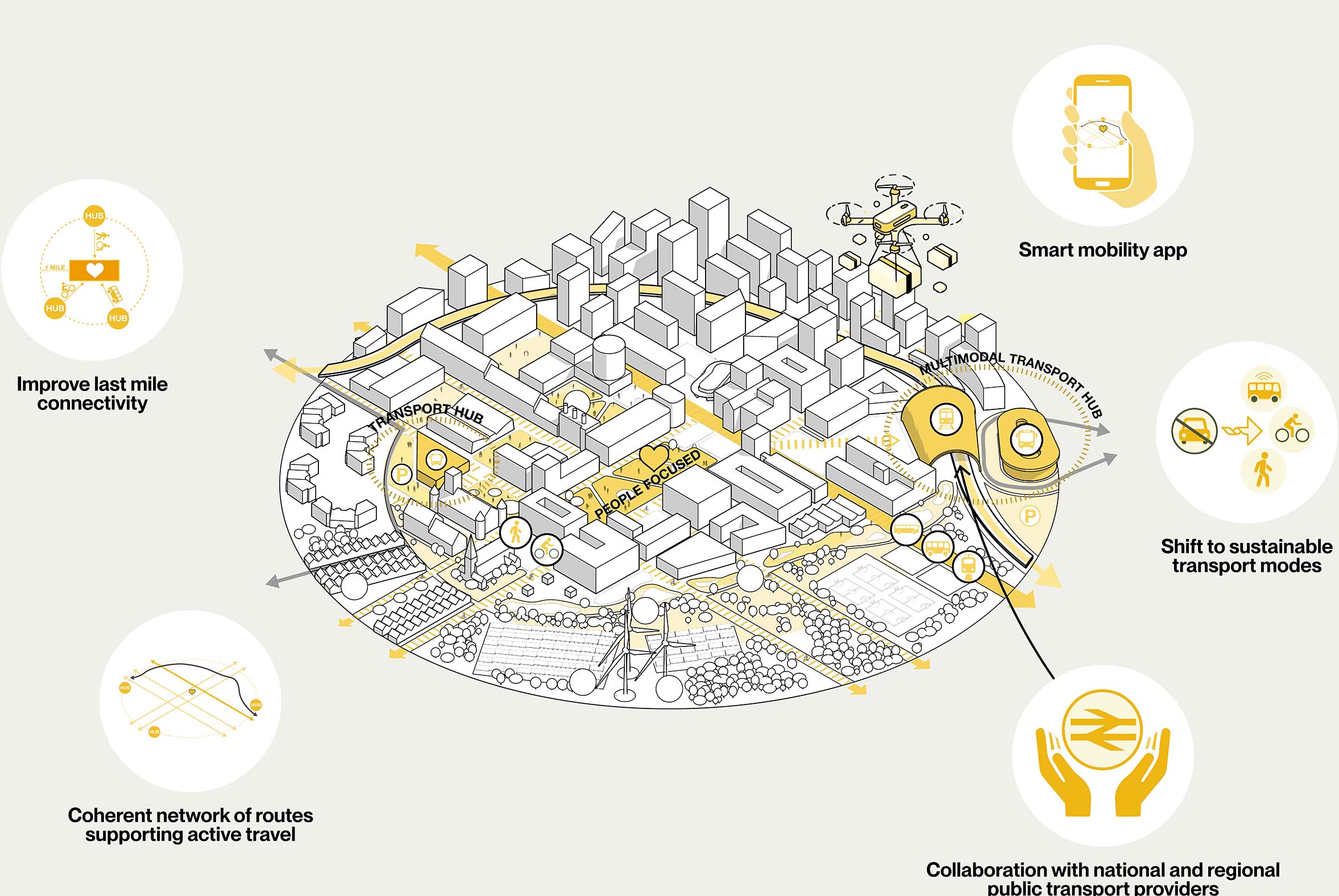
To be connected, an estate must seamlessly integrate with its surrounding context and communities, facilitated by smart and sustainable modes of travel, thereby enhancing the user experience for all.
The current surrounding transport infrastructure presents several challenges, including:
- Regional and national public transport that is unreliable and disjointed, contributing to a reliance on single-occupancy private car use and resulting in high scope 3 carbon emissions.
- Limited last-mile connection options between transport hubs and the campus.
- The user and visitor experience is spoilt by the dominance of large surface car parks, which detract from the overall environment.
- There is a fragmented network of pedestrian and cycle routes, leading to a poor user experience overall.
Your future estate will be transformed by a smart and sustainable transport strategy that includes:
- Leveraging your regional leadership position to influence and integrate emerging National and Regional transport initiatives effectively.
- Promoting a shift to more sustainable modes of travel through both physical interventions and behavioural change initiatives.
- Providing “friction-free” modal transfer and on-demand micro-transit services, improving last-mile connectivity to and around the estate.
- Limiting vehicles in the heart of the estates while establishing perimeter mobility hubs to facilitate seamless transitions between various transport modes.
- Have a coherent and legible network of routes across the estate that encourages active travel and prioritises inclusivity and safety for all users.
- Use smart technology to enhance the overall user experience.
- Understand the baseline and current modal patterns to inform decision-making.
- Collaborate with regional transport providers and leadership to ensure alignment with broader transportation initiatives.
- Develop a flexible and scalable strategy that supports change through planned interventions in a phased and deliverable manner.
- Agree early wins through policy interventions, such as car-sharing schemes and adjustments to parking charges, to drive behavioural change effectively.
- Develop an estate-wide public realm and wayfinding strategy, along with design guides, to enhance the overall user experience.
- Explore the use of SMART technology, or a customised mobility app, to further improve user convenience.
- Future-proof the strategy to safeguard routes for future transport initiatives (VLR etc.).
- Support the route to net-zero carbon incorporating micro-generation at transport hubs and nodes, such as photovoltaic panels for charging electric bikes and scooters, as well as providing infrastructure for electric charging and potentially hydrogen-refuelling.
- Ongoing monitoring and reassessment to ensure the strategy remains effective and responsive to evolving needs and circumstances.
Zero-Carbon Infrastructure
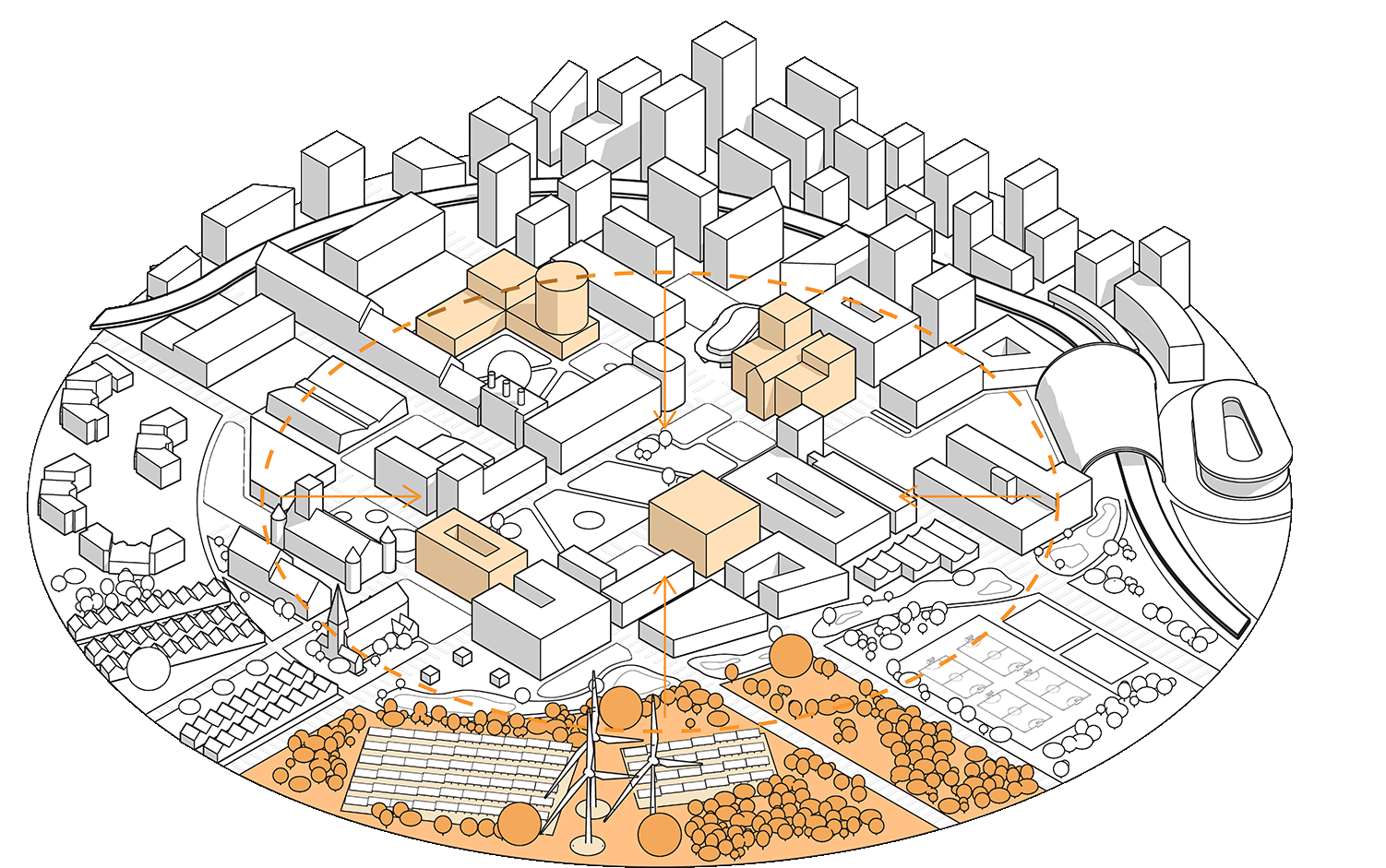
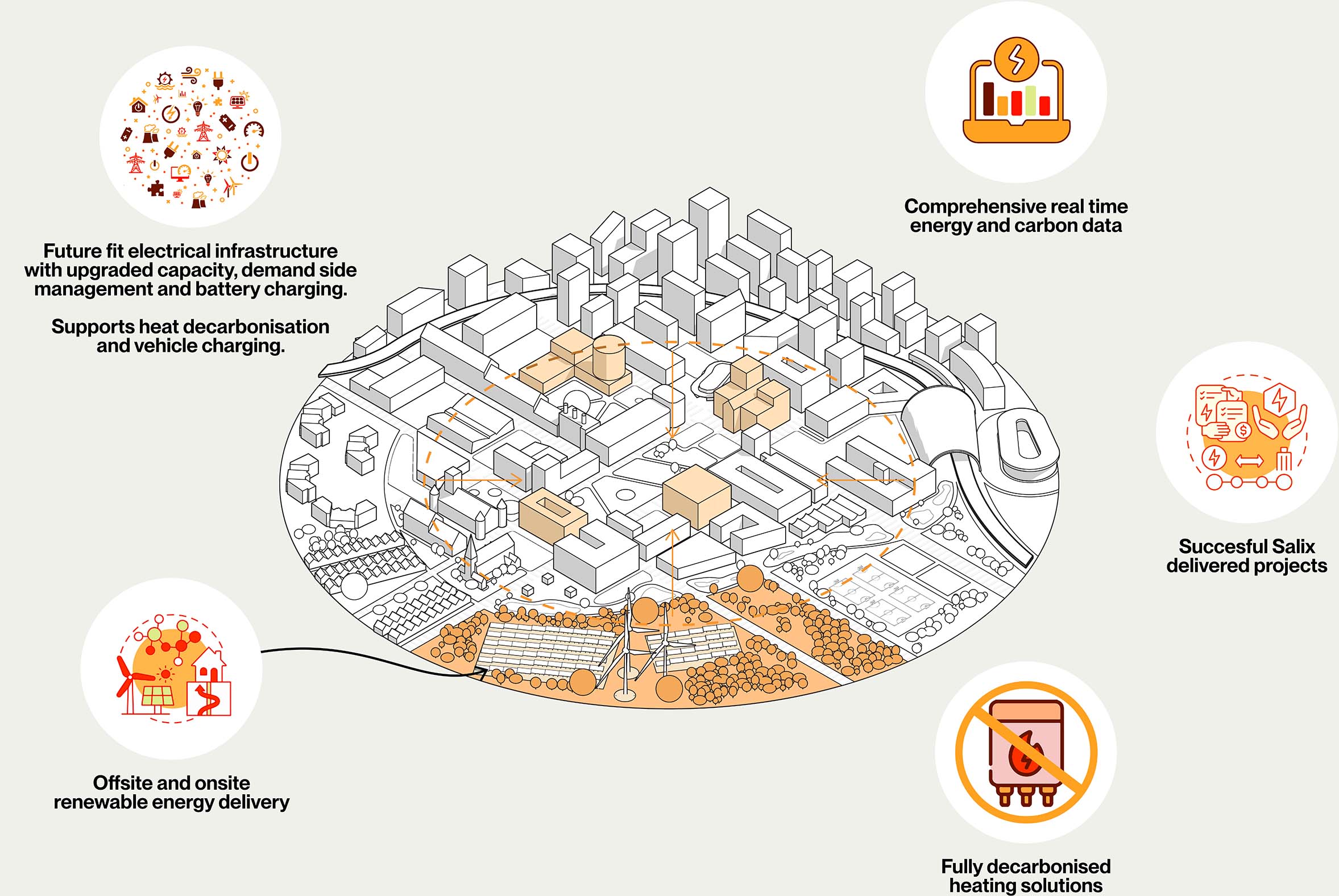
A robust and scalable energy and infrastructure strategy that ensures both business continuity and the overarching goal of achieving carbon zero.
- There is currently a carbon gap between policy and reality that needs bridging to reduce emissions and mitigate climate change impacts.
- Fragmented data sources are hindering informed decision-making and monitoring of progress.
- The estate relies too heavily on fossil fuels.
- Infrastructure is tired and resilience is fragmented. There is an urgent need to transition to cleaner energy sources and enhance the overall resilience of the system to withstand environmental and other stressors.
- Many easy wins have been taken, through PV role out and lighting upgrades. More disruptive interventions are required
By tackling these issues through a comprehensive yet phased plan, your estate can make significant strides towards a net zero future.
To establish a comprehensive energy and infrastructure strategy, several key components must be addressed:
- Build a foundation for future planning by conducting a thorough baseline assessment of current energy and infrastructure systems.
- A techno-economic appraisal of the various options, including offsite and onsite generation, centralised or decentralised distribution, and potential energy sources like solar, wind, hydroelectric, and geothermal, will help inform decision-making.
- A phased and costed plan for delivery outlining financial requirements and timelines for implementation.
- Develop design information for early phases and align these to funding call opportunities.
- Align Implementation of specific energy and infrastructure projects to the wider estate roadmap to ensure each project contributes to the end state.
- Governance structures must be established to ensure accountability and oversight throughout the process.
- An offsetting strategy will allow for the mitigation of unavoidable carbon emissions.
By addressing these components cohesively, you can develop and implement a robust energy and infrastructure strategy that supports sustainability goals and enhances overall operations.
- Develop a comprehensive implementation program outlining the steps and timelines for executing various initiatives.
- Secure funding streams to support the necessary investments in infrastructure and technology upgrades.
- Transition to upgraded, clean and resilient energy supply sources that will enhance sustainability and resilience.
- Consider both onsite and offsite generation options to allow for flexibility and optimisation in energy production.
- Establish design guides and project specifications that require energy projects to meet performance and sustainability objectives.
Ongoing monitoring and reassessment will be critical to track progress, identify areas for improvement, and adapt strategies as needed to achieve long-term sustainability goals. By integrating these elements, you can develop and execute an effective energy strategy that promotes operational efficiency.
Smart Infrastructure
Integrating digital technology into the physical infrastructure is essential for creating an intelligent and autonomous estate, yielding numerous benefits in sustainability, space utilisation, building efficiency, cost management, and enhancing the overall user experience.
- The estate consists of a diverse portfolio of buildings with varying characteristics.
- There is a range of different building systems in place, each with their own complexities and requirements.
- The internal digital/IT team possesses latent knowledge and expertise, which could serve as a valuable resource.
- Ageing network and digital infrastructure is nearing the end of its lifecycle.
- Siloed strategies exist among various departments, including Estate Management, Capital Developments, Digital/IT, and Sustainability
Alignment and synergy is necessary across the estate. By mapping out these elements, a clear understanding of the current state can be established, laying the groundwork for future planning and improvements.
- A strategy encapsulating the overarching vision, benefits, and investment plan, to provide clear direction for implementation.
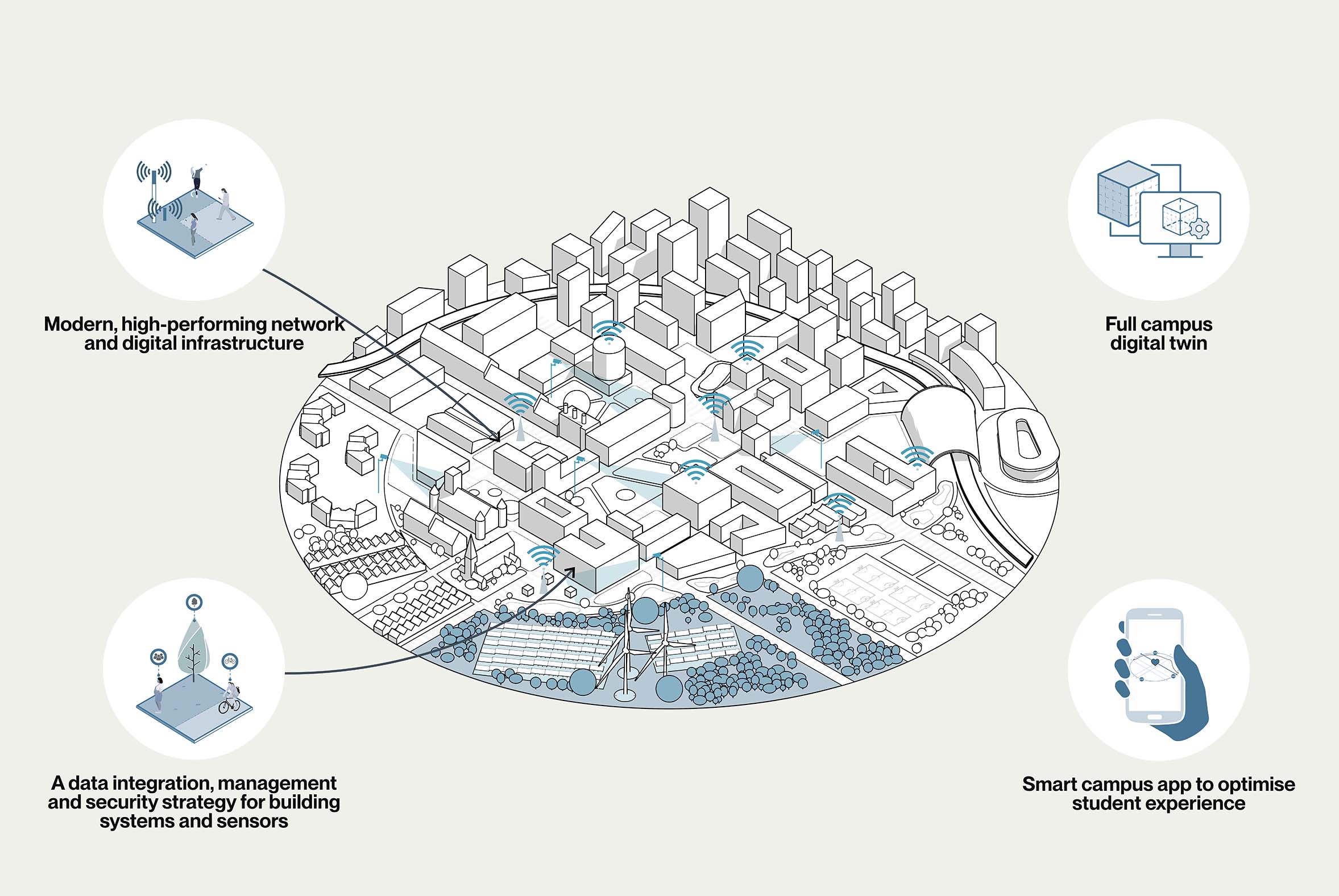
- Modern, high-performing network and digital infrastructure to support future technological advancements.
- Data integration, management, and security strategy for building systems and sensors to harness the potential of data-driven insights effectively.
- An operating model with clearly defined roles and responsibilities for Estate Management, Facilities, IT, and users to facilitate smooth operations and collaboration.
- Adherence to Smart Campus Principles to inform decision-making and alignment with sustainability, efficiency, and user-centric goals.
- Develop a Smart Campus Strategy that engages digital/IT teams, leveraging their expertise and ensuring alignment with organisational goals.
- Explore smart use cases and their associated benefits to help identify opportunities for improvement and innovation.
- Demystify the smart ecosystem and demonstrate links between technology/infrastructure and the use cases.
- Develop an investment plan, identifying quick wins from the current state, prioritising new investments, and including Proofs of Concept to test feasibility.
- Agree budgets, program plans, and roles and responsibilities (RACI).
- Integrate the Smart Campus Strategy with broader organisational strategies, ensuring cohesive implementation and maximum effectiveness.
By following these steps, you can develop a robust Smart Campus Strategy that enhances efficiency, sustainability, and user experience.
Ideas & Case Studies.

How Can BDP Support You?
Our Approach.
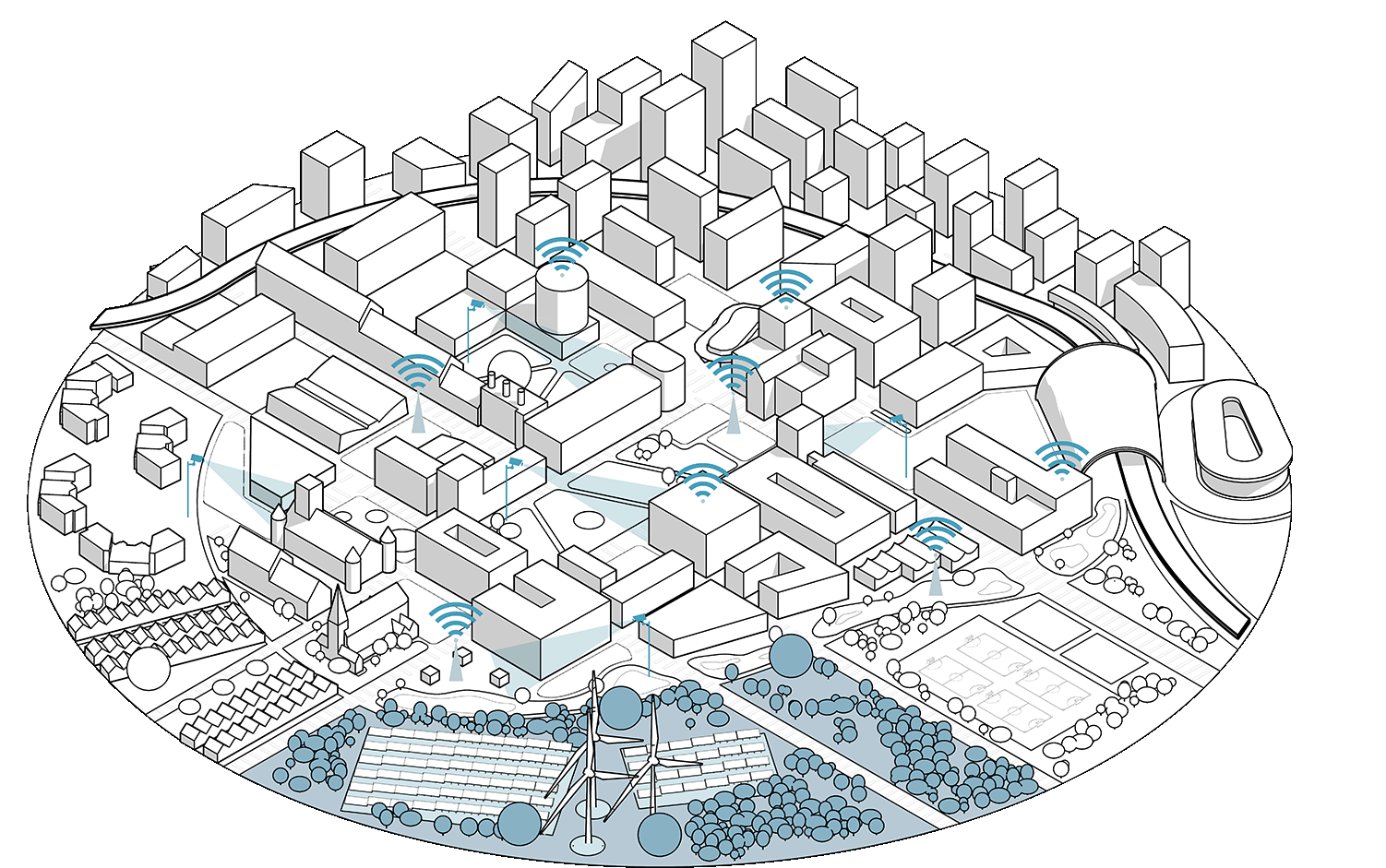
Your estate now
- Understand the baseline
- BDP global best practice
- BDP cross-sector learning
Your future estate roadmap
- Scenario testing
- Integrated and holistic response
- Clear vision and priority objectives
Delivering your roadmap
- Compartmentalisation and individual project definition
- Funded phasing strategy
- An implementation plan that maintains student experience and minimises campus disruption
- Clear governance and independent decarbonisation champion
Speak to us.

OptimisingEstates.
Climate Stripes by Professor Ed Hawkins (University of Reading) licensed under CC BY 4.0: showyourstripes.info